
Reverse osmosis (RO) is an advanced water filtration technology designed to remove a wide range of dissolved contaminants from drinking water. Unlike standard filters that simply trap visible particles and sediment, reverse osmosis works at a molecular level to improve water quality.
The process uses the natural pressure from your water supply, or additional pressure where required, to force water through an ultra-fine membrane. This membrane allows water molecules to pass through while blocking many dissolved minerals, impurities and unwanted substances. The captured contaminants are then flushed away, leaving purified water to flow to your tap.
What sets reverse osmosis apart from conventional filtration is its ability to tackle contaminants that are dissolved in the water and cannot be seen with the naked eye. While a standard filter may effectively remove larger particles and sediment, an RO system is engineered to eliminate nearly everything from your water that isn’t water, helping to provide cleaner, clearer and better-tasting drinking water, on tap.
How does a reverse osmosis filtration system work?
Most domestic reverse osmosis systems filter the water in several stages. The exact design varies from one system to another, but the process typically follows a straightforward series of steps.
-
Pre-filtration:
Before reaching the reverse osmosis membrane, water typically passes through pre-filters that remove larger particles and help reduce unwanted tastes and odours. These pre-filtration stages also help protect the RO membrane, maintaining optimum efficiency and long-lasting performance of the system. -
Reverse Osmosis filtration:
The water is then forced through an ultra-fine reverse osmosis membrane, which allows water molecules to pass through whilst blocking a wide range of dissolved impurities and contaminants. -
Filtered and unfiltered separation:
After passing through the RO membrane, the filtered water flows to the dedicated drinking water tap, while the captured contaminants are safely flushed to drain as part of the normal reverse osmosis process. -
Post-filtration:
Depending on the system, the filtered water may then pass through a final carbon filter or remineralisation cartridge before reaching the tap.
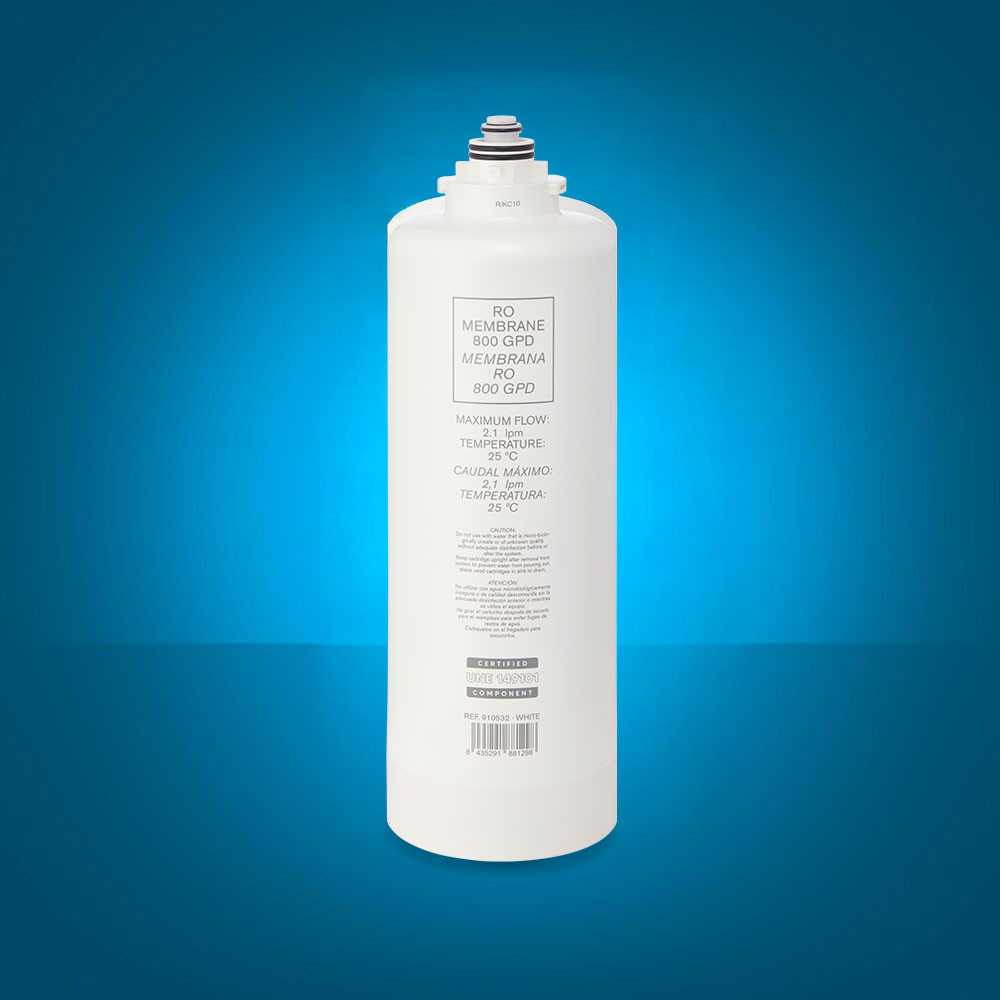
What does the reverse osmosis membrane do?
The reverse osmosis membrane is the heart of the filtration system, designed to reduce dissolved substances that standard filters cannot easily remove.
However, overall performance depends on the complete system, including membrane quality, water pressure and the quality of the incoming water supply.
What filters are used in a reverse osmosis system?
A reverse osmosis system is usually made up of several stages, with each one performing a different job. A typical home system may include:
- a sediment pre-filter to help remove larger particles;
- a carbon pre-filter to reduce chlorine and unwanted tastes and odours;
- the reverse osmosis membrane;
- a final post-filter before the water reaches the tap; and in certain systems, an additional stage that adds beneficial minerals back into the filtered water.
More filtration stages do not necessarily mean better water quality. What matters most is the purpose and quality of each filter, and whether the system is suited to your home’s water supply.
Does reverse osmosis filtration soften water?
Reverse osmosis can reduce calcium, magnesium and other minerals that contribute to water hardness, resulting in cleaner, lower-mineral drinking water. However, an under-sink RO system is designed for drinking water only and is not a replacement for a whole-home water softener.
If you’re looking to reduce limescale throughout your property, a water softener is the better solution, while reverse osmosis is ideal for improving the quality of drinking water at the kitchen tap. Many households choose to install both systems, combining whole-home limescale protection with high-quality filtered drinking water on tap.

Is reverse osmosis filtration suitable for a UK home?
Reverse osmosis filtration is an excellent choice for households looking to enjoy high-quality filtered drinking water straight from the tap. However, the best solution depends on your specific needs, so it’s worth considering these questions before choosing a system.
What would you like to improve?
Consider factors such as taste, water quality and whether there are specific contaminants you want to reduce.
How efficient is the system?
Reverse osmosis systems use water during the filtration process, but efficiency can vary greatly between models.
Is your water pressure suitable?
RO systems rely on adequate water pressure to operate effectively.
What maintenance is required?
Filters and membranes require periodic replacement, after a set time period or quantity of water filtered. A regular sanitisation of the system is also recommended to maintain maximum system performance.
Would you prefer beneficial minerals to be added back into the final drinking water supply?
Certain systems include a remineralisation stage that reintroduces selected minerals after filtration.
Who will install and maintain the system?
Professional installation and regular maintenance can help ensure reliable, long-term performance.
A professional water assessment by a water expert can help identify the most effective solution for your home, whether that’s reverse osmosis, carbon filtration, water softening, or a combination of systems.
Reverse osmosis filtration FAQs
Yes, an RO system will remove the minerals that make water hard, providing water that is free from calcium and magnesium to a single tap. However, if you’re looking to tackle limescale throughout the entire home, a water softener is specifically designed to treat the whole property’s water supply.
Yes. During the filtration process, unfiltered water containing the impurities captured by the RO membrane are flushed away. The amount varies between systems, so it’s worth comparing water-efficiency ratings when choosing the right model for your home.
Replacement schedules can vary between systems, depending on the type of filters used, water quality, and household water consumption. To maintain maximum performance, always follow the manufacturer’s recommended maintenance and filter replacement guidelines.
Is reverse osmosis the right choice for you and your home?
Reverse osmosis is a highly effective way to enjoy cleaner, better-tasting drinking water at home. When comparing systems, it’s important to look beyond the membrane and consider factors such as filtration performance, water efficiency, maintenance requirements and overall system quality.
To learn more, explore our guide to reverse osmosis filtration, or discover the range of Kinetico RO systems available to find the right solution for your home.